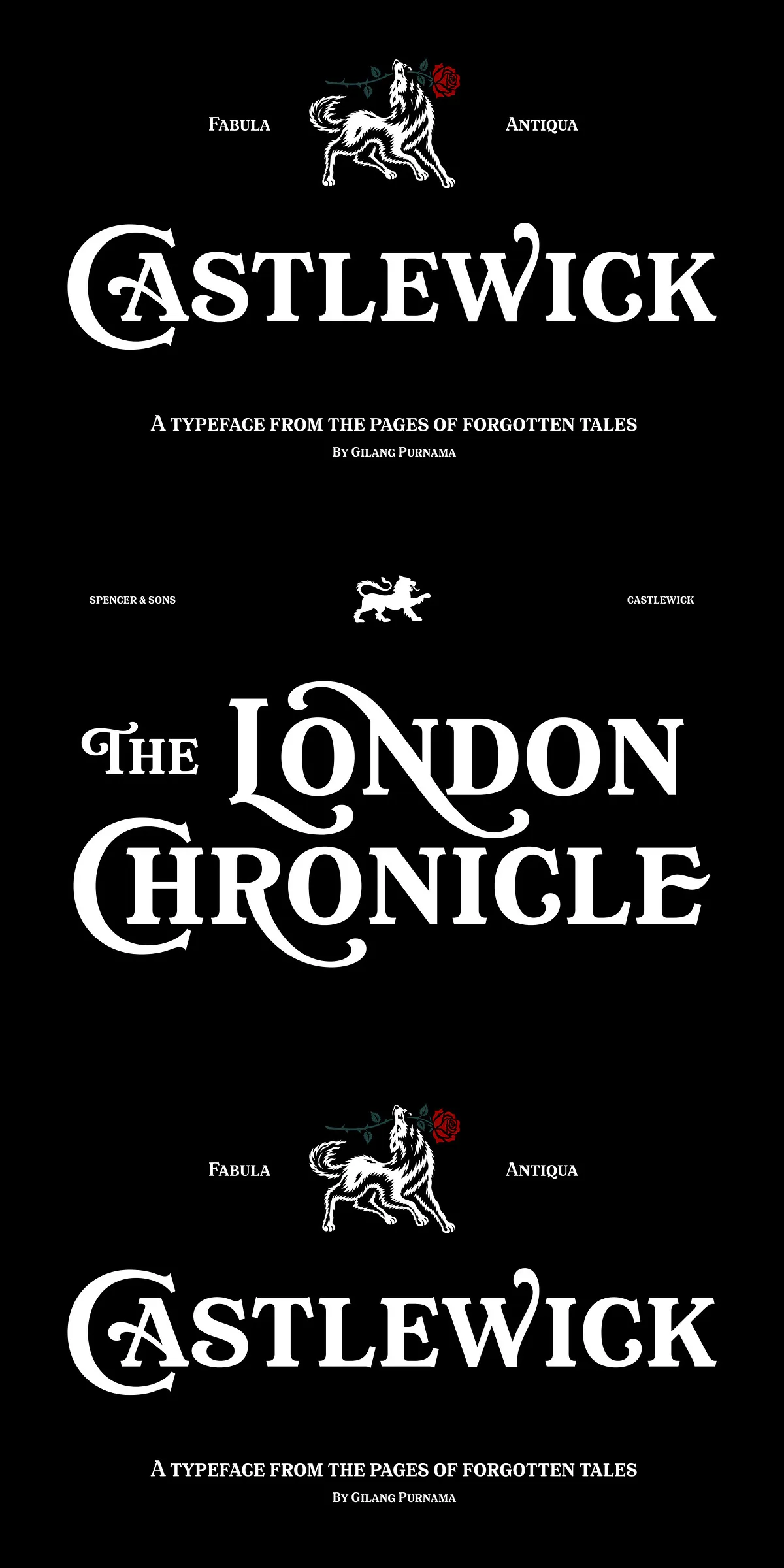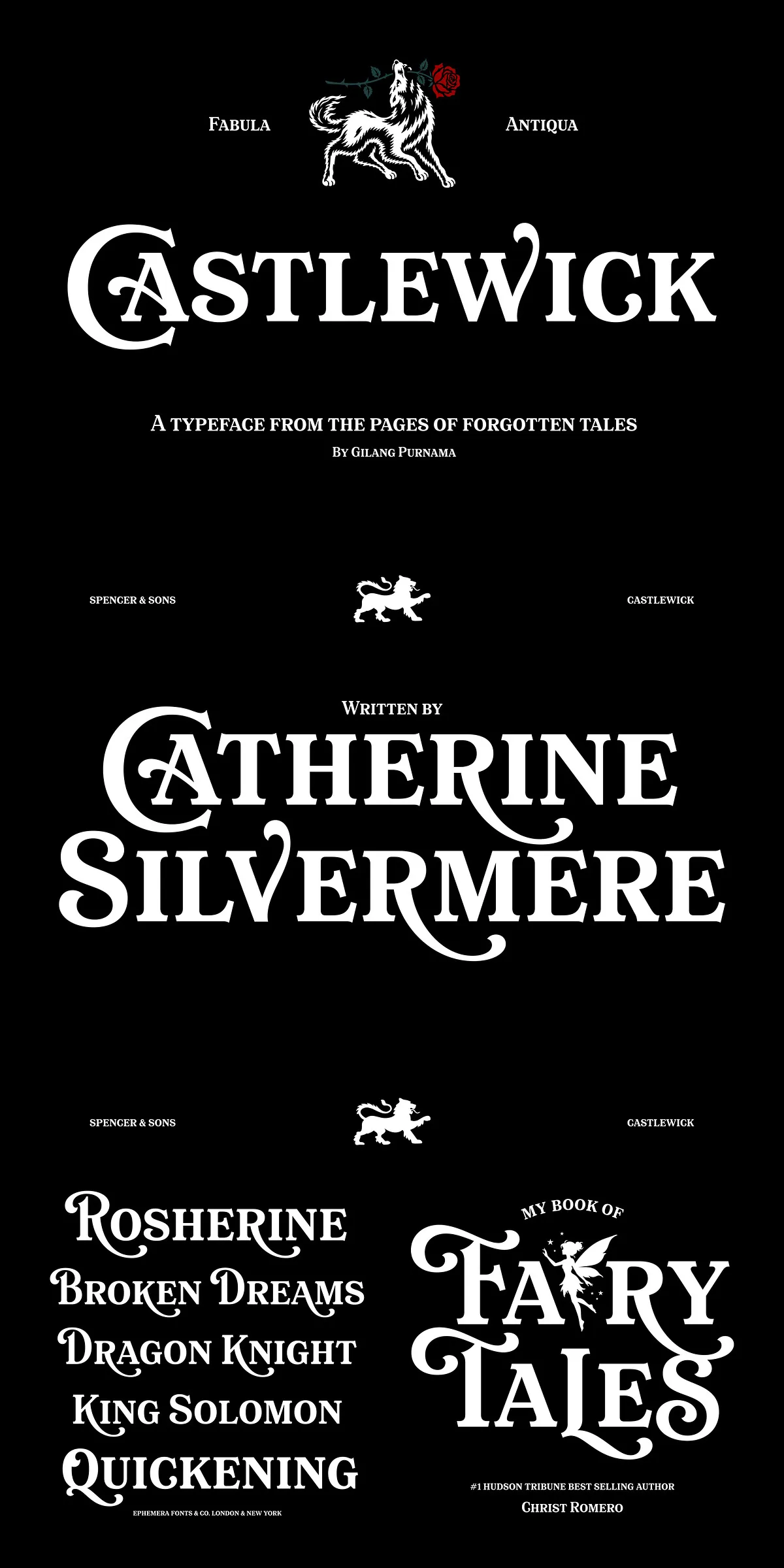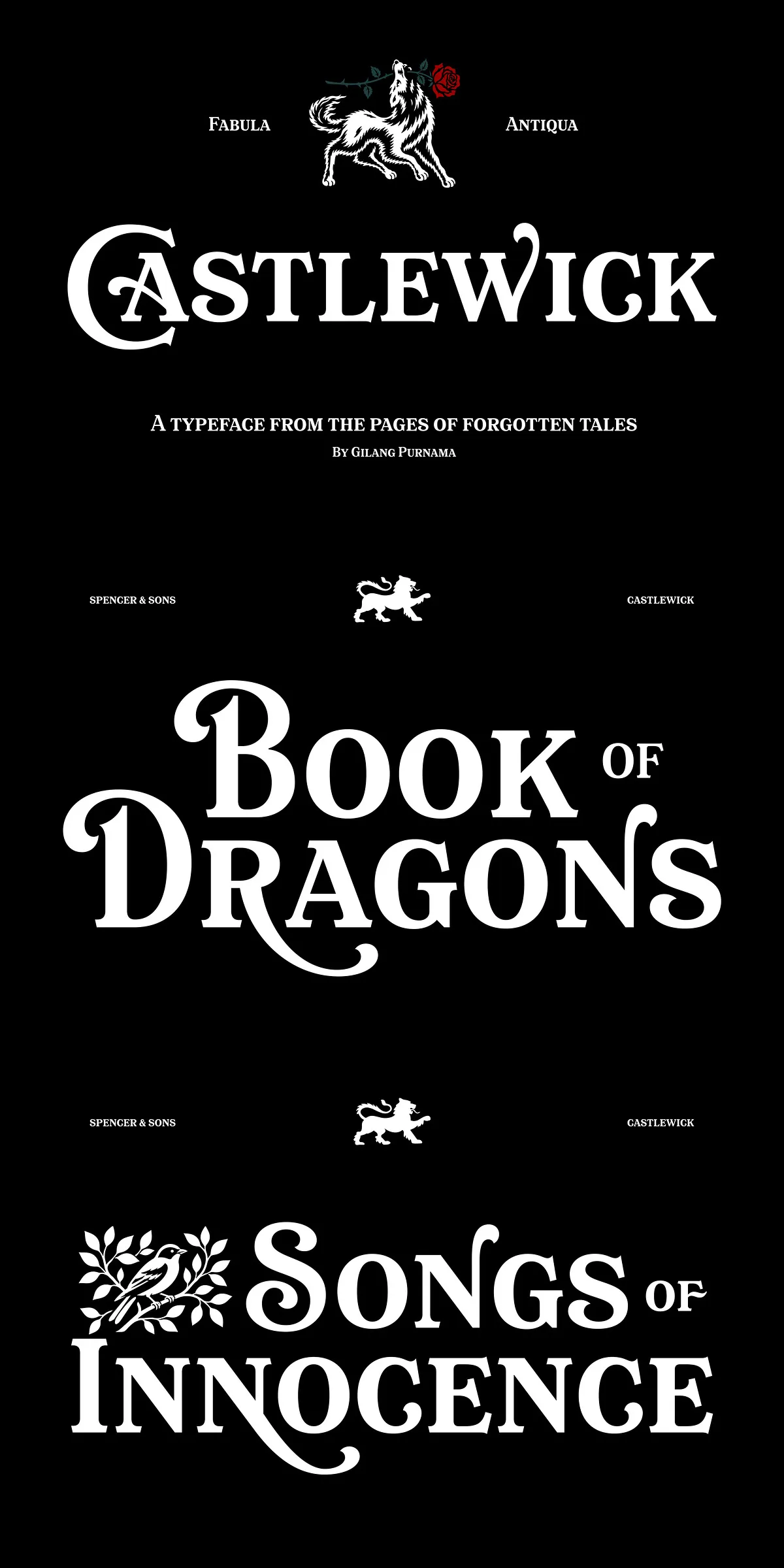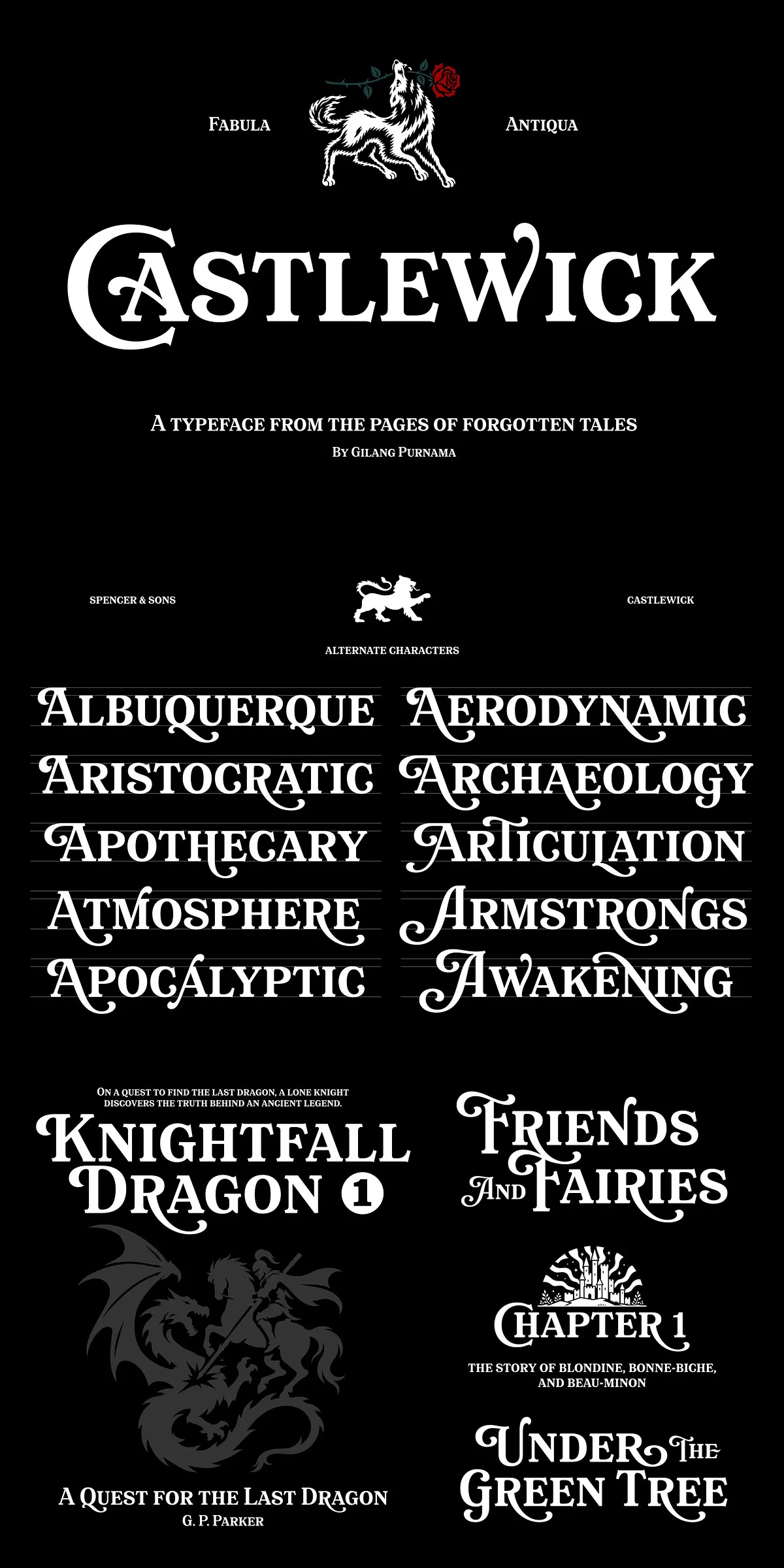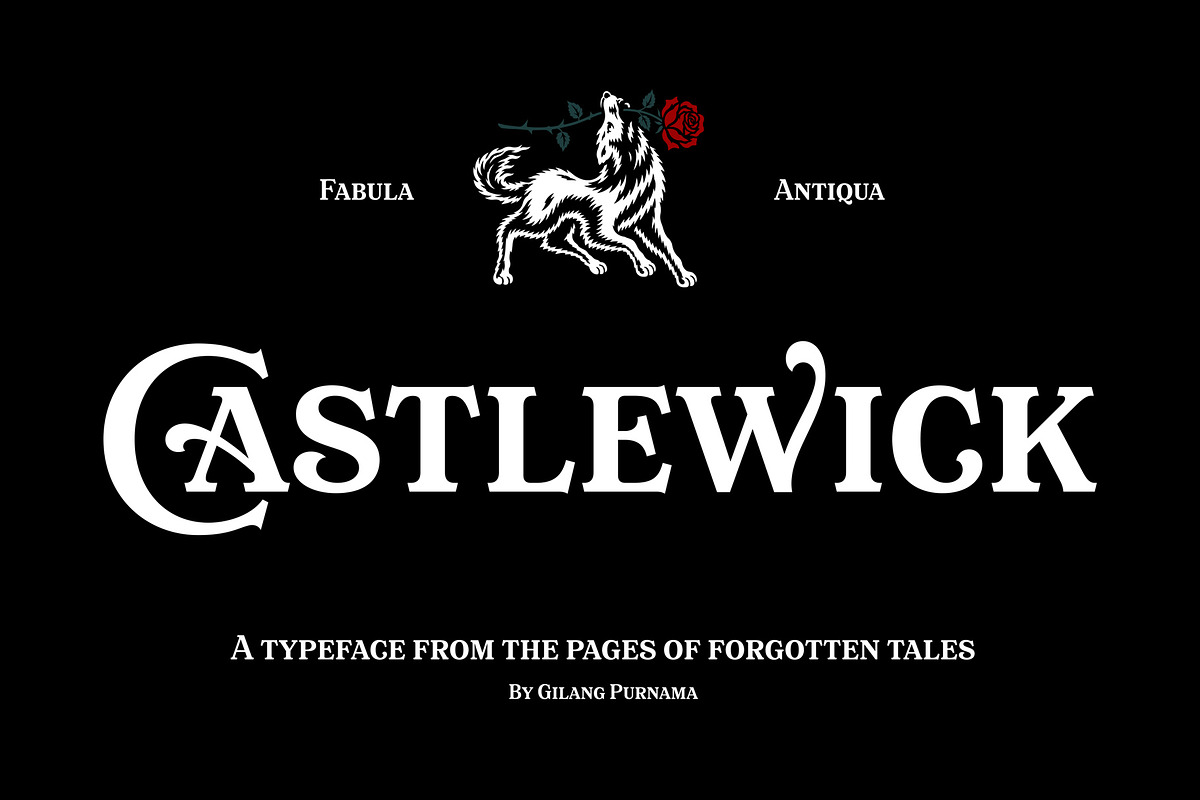

Castlewick channels the warmth and whimsy of classic fairy tales and vintage fantasy covers while performing confidently in modern design workflows. The family features bold letterforms and elegant swashes that actively draw attention and shape narrative titles. Each glyph carries deliberate personality: generous serifs, flowing terminals, and ornamental alternates that combine to produce a cohesive, nostalgic voice. Designers will find Castlewick specially tuned to produce dramatic display treatments that read clearly at headline sizes while retaining ornamentation that supports rich, illustrative compositions.
Creative Uses And Practical Applications Across Projects
Deploy Castlewick whenever a project needs a magical, timeless identity. Use the font to craft evocative book covers, theatrical posters, and fantasy branding systems that demand memorable headlines. Castlewick excels on packaging and badges where ornate letterforms reinforce premium character, and on editorial mastheads where story-driven typography amplifies voice. Its playful but elegant personality fits wedding stationery, boutique product labels, and handcrafted packaging that aims to evoke nostalgia and charm. Because Castlewick pairs well with neutral sans-serifs, you can combine it with modern body text to maintain readability while preserving a vintage display aesthetic.
Technical Features And File Formats Included With Castlewick
Castlewick ships with a comprehensive technical package to support production across print and digital. The font is PUA encoded, enabling instant access to alternates and swashes via glyph panels in common design applications. Expect desktop-ready OTF/TTF files plus web-optimized WOFF/WOFF2 formats for seamless embedding. The family includes upper- and lowercase characters, numerals, punctuation, and a rich set of over 200 alternates and decorative glyphs that unlock diverse typographic combinations. Kerning and metrics are tuned for display use, and the PUA mapping reduces setup time when assembling ornate wordmarks and titles.
How To Access Alternates And Use PUA Encoded Glyphs
Access Castlewick’s alternates through your design app’s glyph or character panel. Because the font is PUA encoded, you can insert swashes and decorative forms without needing OpenType feature support—this simplifies editing in software that does not fully support advanced typographic features. For OpenType-aware workflows, enable stylistic sets and discretionary ligatures to automate alternates for consistent results in long compositions. Experiment with manual glyph substitution for bespoke logotypes and title treatments to create one-of-a-kind wordmarks.
Typography Pairing Tips And Best Practices For Castlewick
Pair Castlewick with restrained sans-serifs or neutral serifs to balance ornamentation with legibility. Reserve Castlewick for display roles—headlines, logos, titles, and hero graphics—while choosing a clean, readable face for body copy. Introduce generous spacing around Castlewick headings to let its swashes breathe and to preserve clarity at smaller sizes. Use color and texture to amplify the vintage mood: subtle gradients, paper textures, or metallic finishes complement Castlewick’s storybook aesthetic without overwhelming letterforms.
Licensing Guidance And Production Workflow Recommendations
Confirm licensing terms before using Castlewick in commercial projects. Typical deliveries include desktop and web licenses—verify whether embedding, app integration, or broad distribution require additional rights. For print output, embed the OTF/TTF in PDFs to ensure consistent rendering across vendors. For web use, serve WOFF/WOFF2 with font-display strategies (for example, font-display: swap) to maintain performance while preserving brand identity. Test alternates across platforms to ensure PUA glyphs display as intended in your target applications.