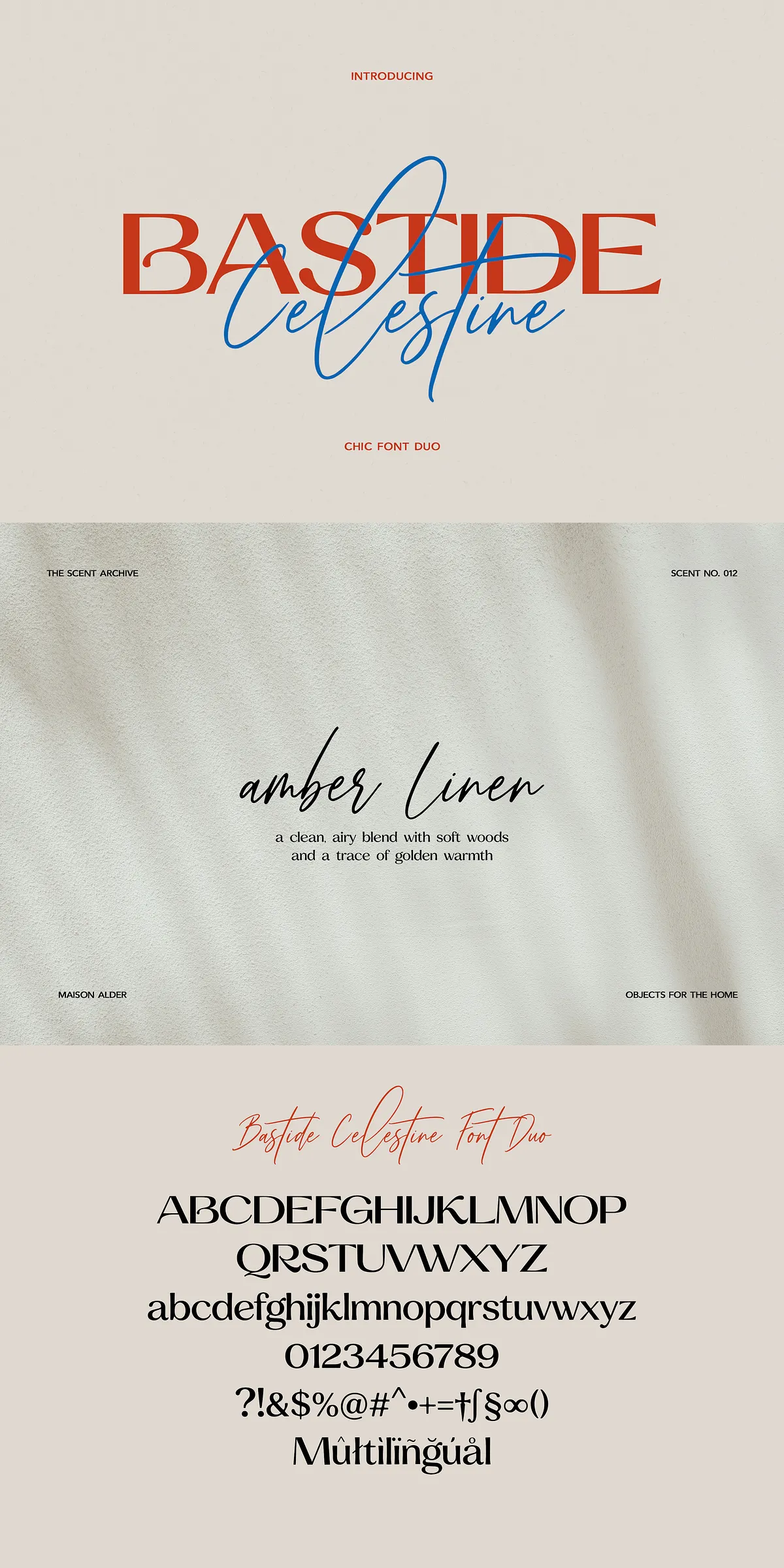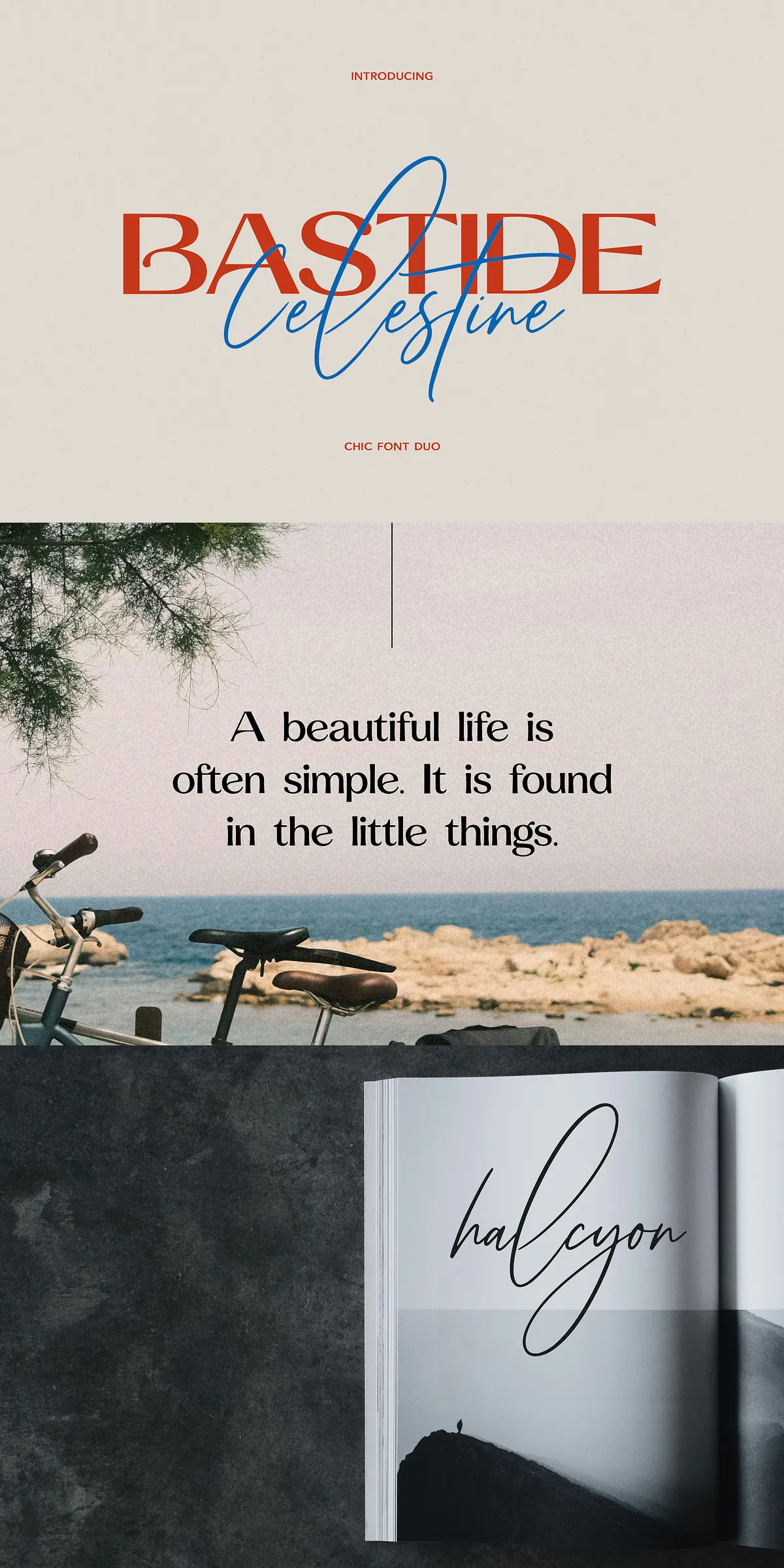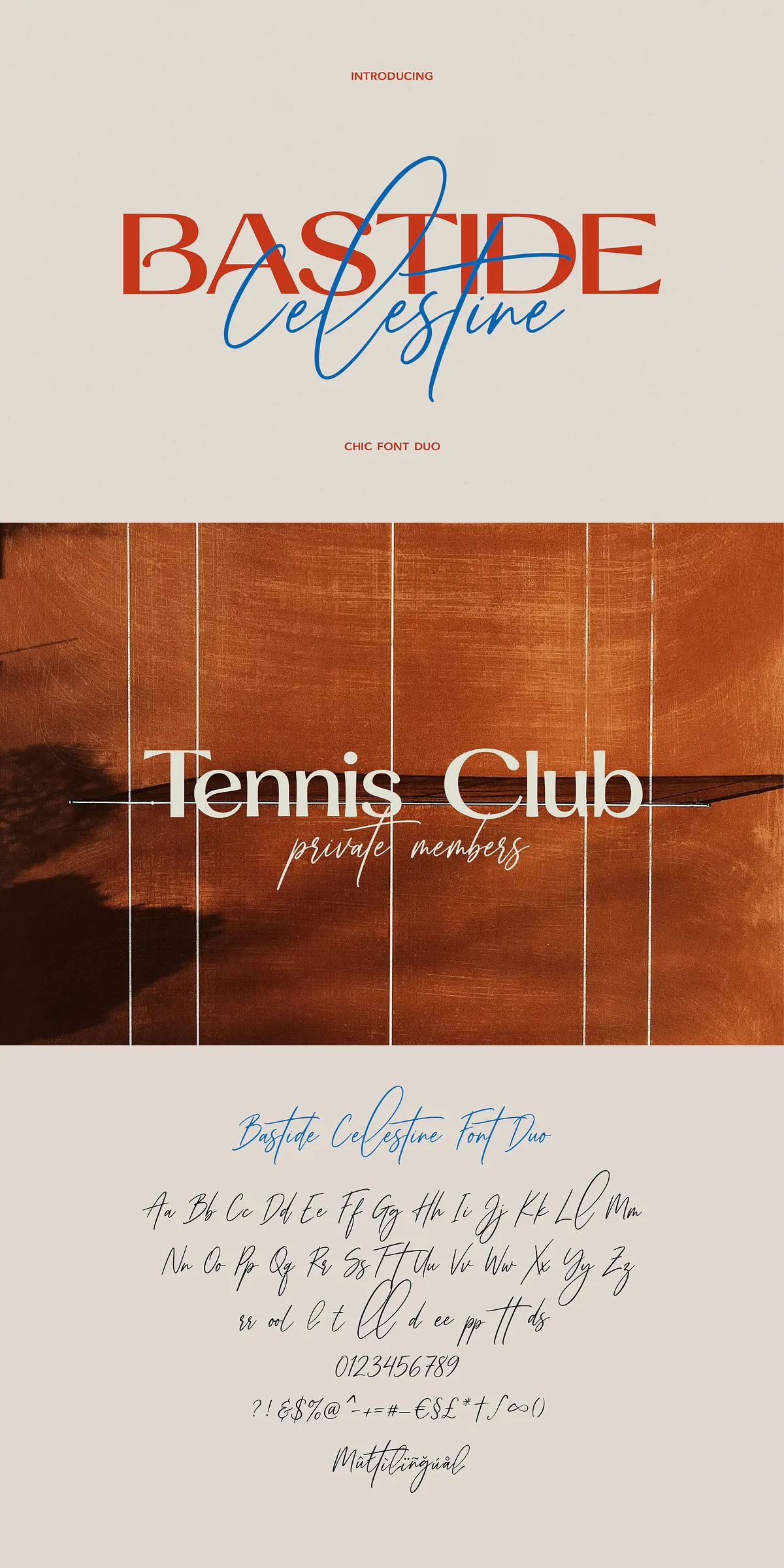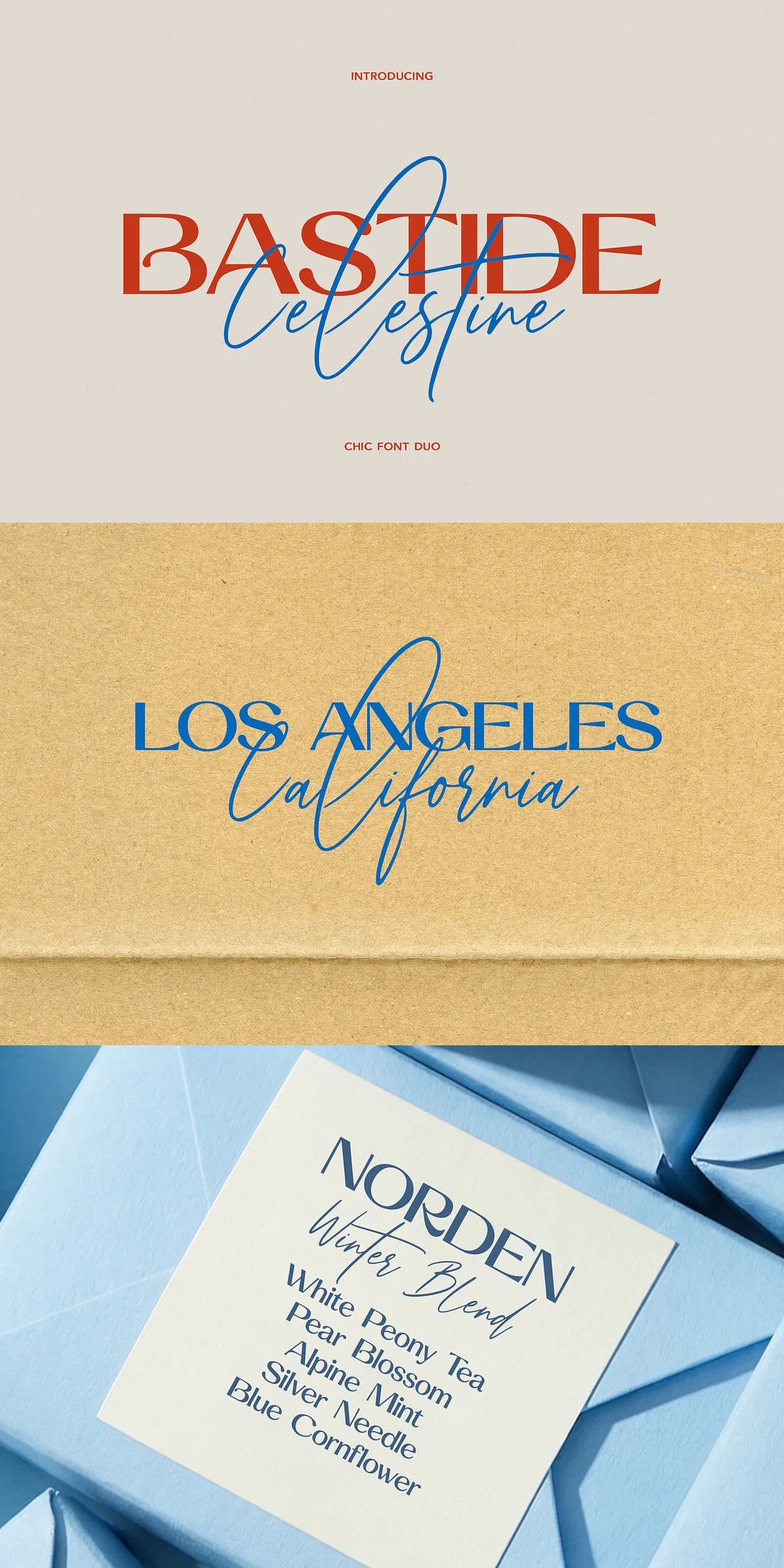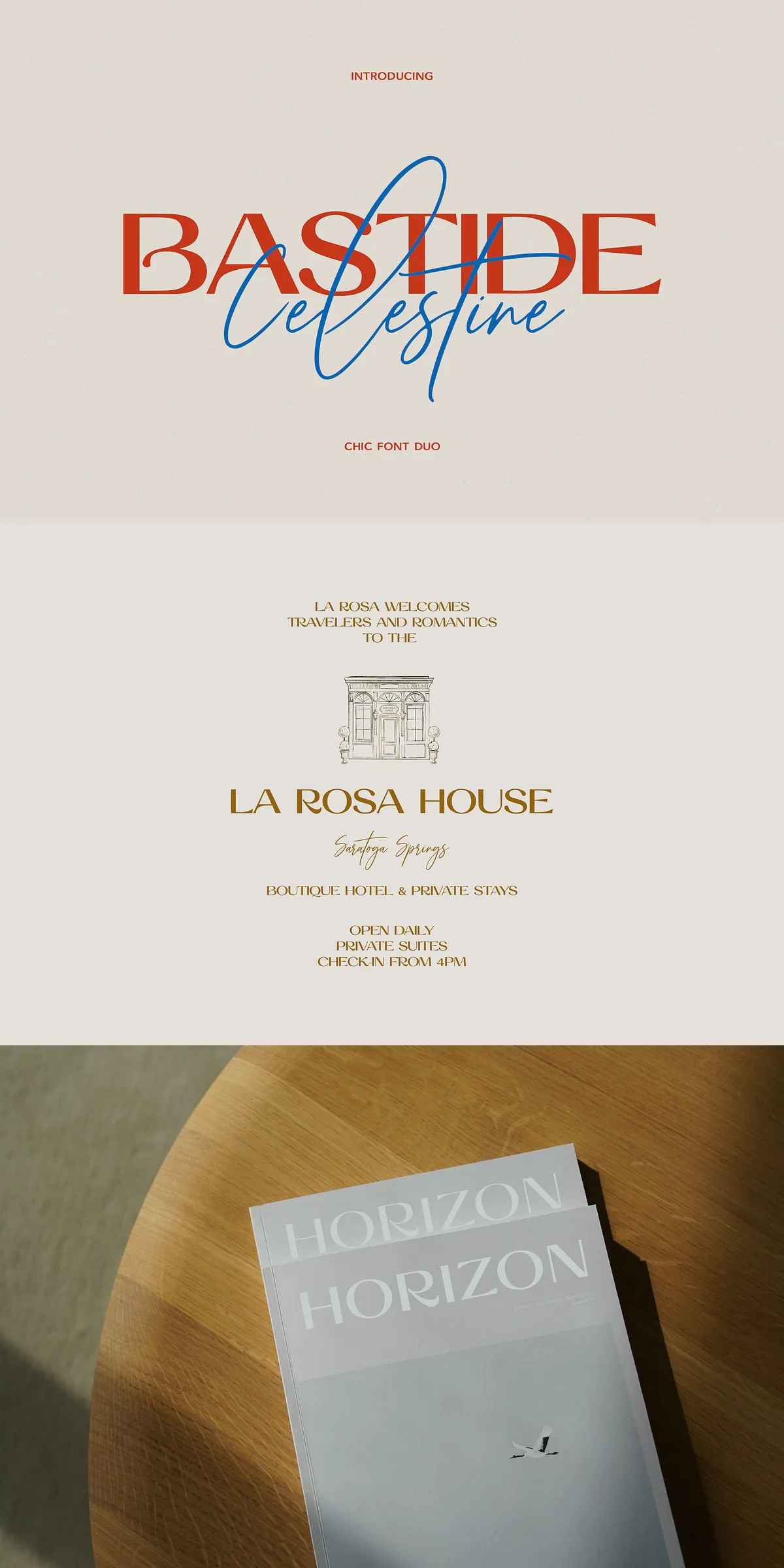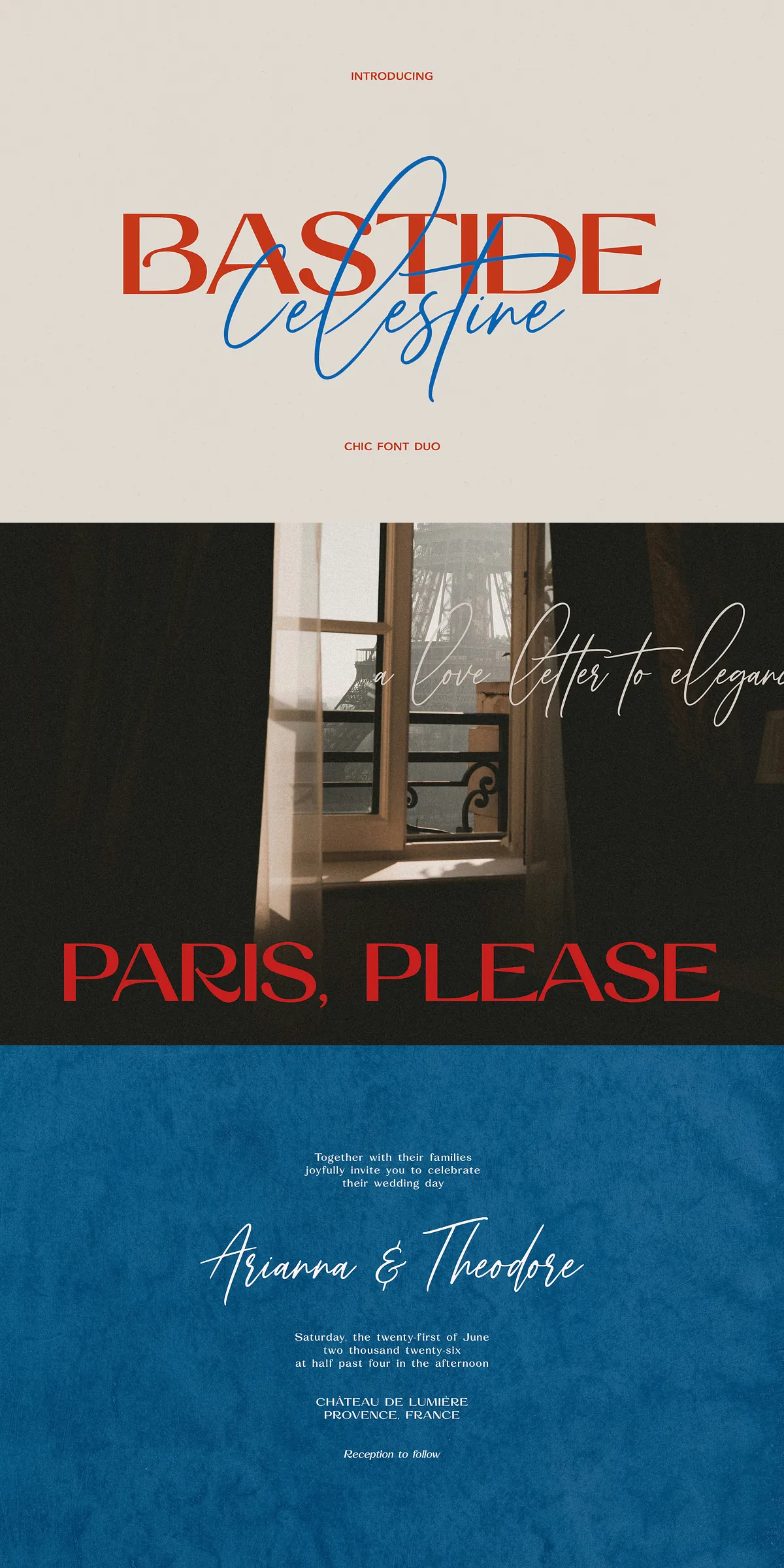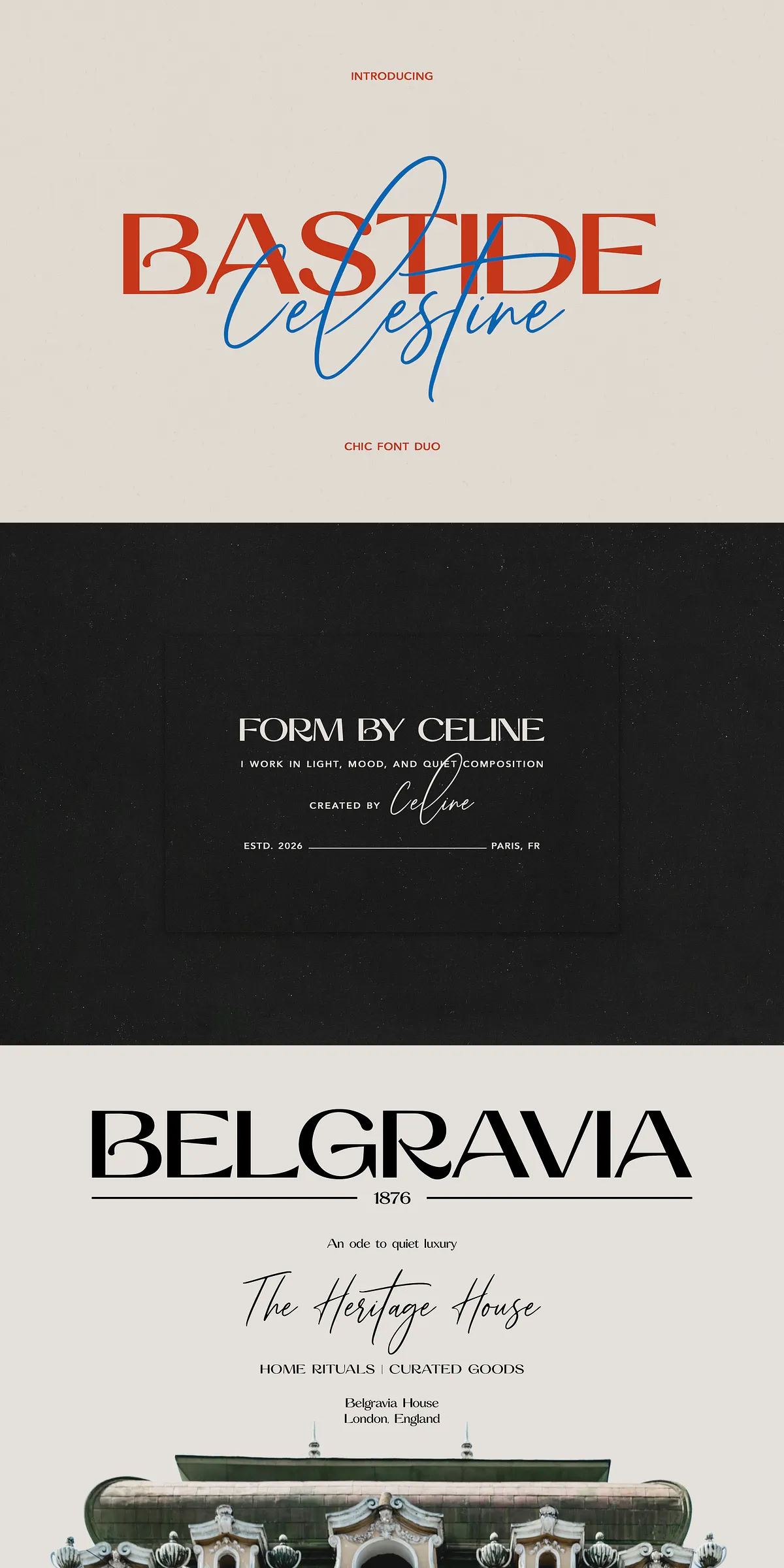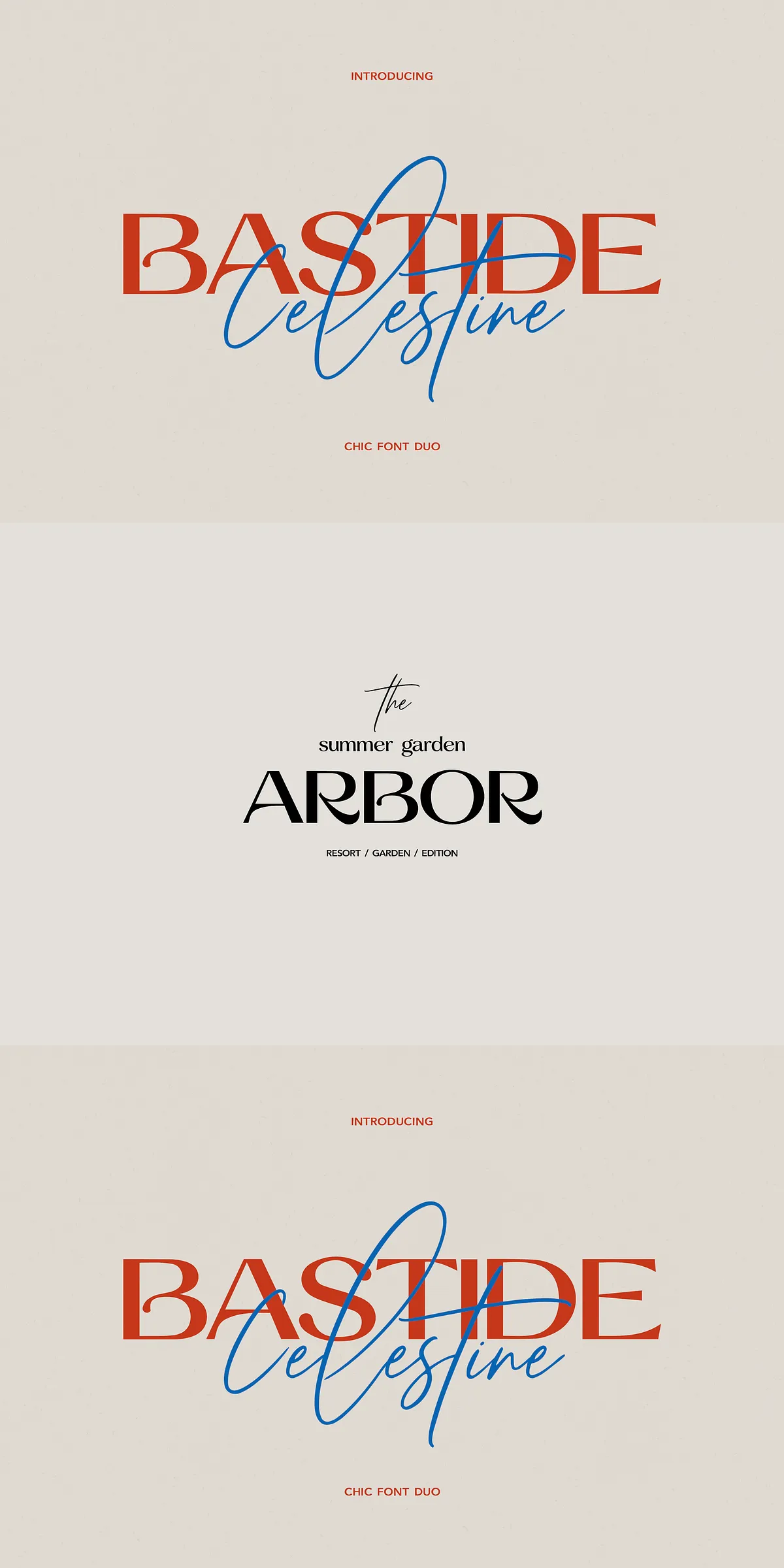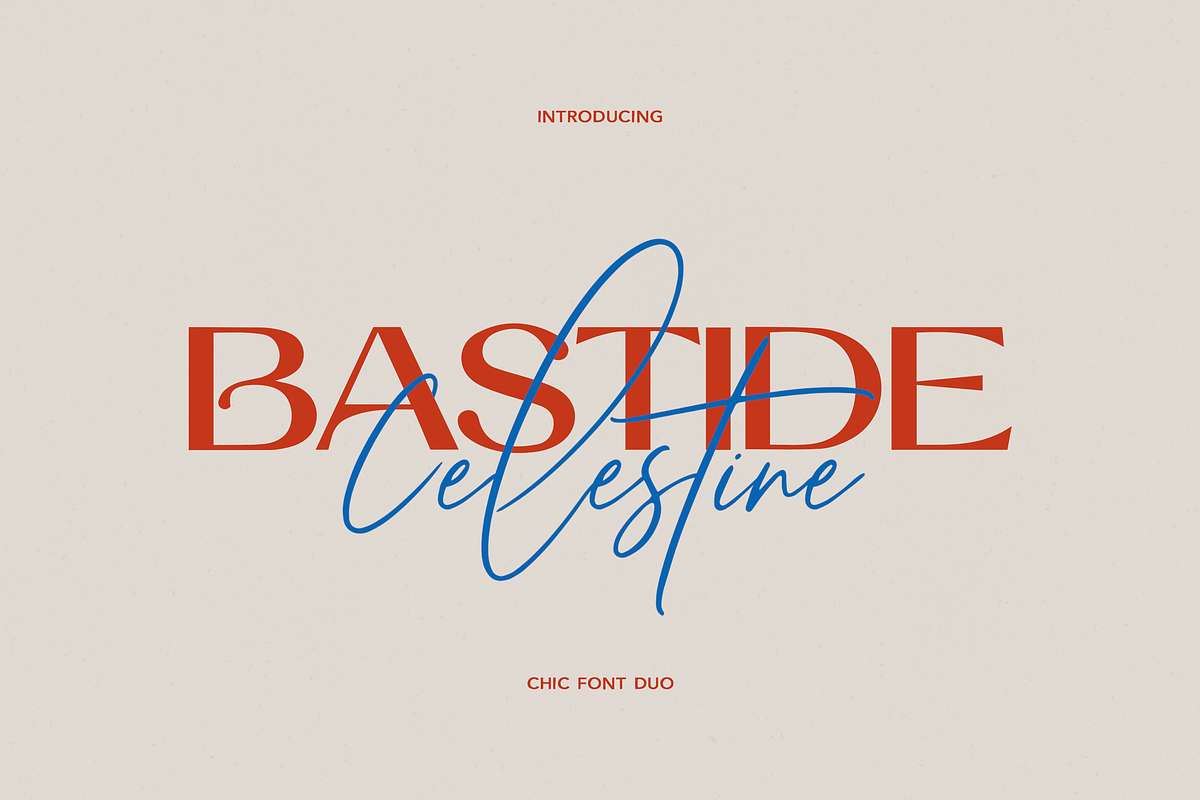

Bastide Celestine pairs a refined, high-contrast serif with a delicate signature-style script to deliver a polished, editorial voice. The serif side asserts timeless elegance through sharp curves, confident stems, and refined contrast that reads beautifully at headline sizes. The companion script supplies fluid movement, intimate personality, and expressive terminals that feel handcrafted yet intentionally composed. Together they produce a cohesive typographic system that balances structure and spontaneity, enabling designers to create luxurious, modern compositions without sacrificing warmth.
Practical Applications And Creative Uses Across Design Projects
Use Bastide Celestine to build identities that demand sophistication and personality. Deploy the serif for arresting headlines, magazine mastheads, and premium packaging where high-contrast letterforms convey authority and style. Layer the script over logos, invitations, and product labels to inject human warmth and motion. For wedding stationery, combine serif headlines with script names for a readable, romantic hierarchy. For fashion editorials and beauty brands, rely on the serif to anchor layouts while the script accentuates key phrases and signature marks. The duo also excels in social media templates, boutique branding, tags, and greeting cards—anywhere you want to merge editorial power with a handcrafted flourish.
Typography Pairing Techniques And Visual Hierarchy Recommendations
Create clear hierarchies by reserving Bastide Celestine’s serif for display-scale elements and headings, then use the script sparingly as an accent to draw attention. Increase letterspacing slightly on serif headlines to emphasize luxury and breathe room around ornate script forms. Pair the duo with neutral sans-serifs for long-form body text to maintain readability and modern contrast. When building logos, experiment with combining script signatures with strong serif logotypes to achieve both uniqueness and presence. Use color, subtle textures, and restrained ornamentation to complement the fonts without overpowering their forms.
Technical Features, File Formats, And Language Support Included
Bastide Celestine ships in production-ready formats suitable for print and web. Expect OTF/TTF files for desktop use and WOFF/WOFF2 for web embedding. The script includes contextual alternates and connecting forms that produce natural handwriting flow; the serif includes small caps, ligatures, and stylistic alternates to refine editorial treatments. The family supports broad Latin language coverage so you can deploy it across international projects with confidence. Language support includes English, French, German, Spanish, Portuguese, Italian, Dutch, Danish, Norwegian, Swedish, Finnish, Icelandic, Irish, Scottish Gaelic, Welsh, Faroese, Estonian, Albanian, Catalan, Galician, Luxembourgish, Basque, and Afrikaans.
Workflow Tips, Licensing Guidance, And Production Best Practices
Confirm licensing terms before commercial deployment—desktop, web, app embedding, and retail use often require specific licenses. For web use, serve WOFF/WOFF2 and adopt font-display strategies such as font-display: swap to preserve performance. For print deliverables, embed fonts in PDFs to ensure consistent output from vendors. Use OpenType features in design apps to enable contextual alternates for the script and stylistic sets for the serif. When exporting logos or wordmarks, convert text to outlines only after final approval to preserve editability during revisions.