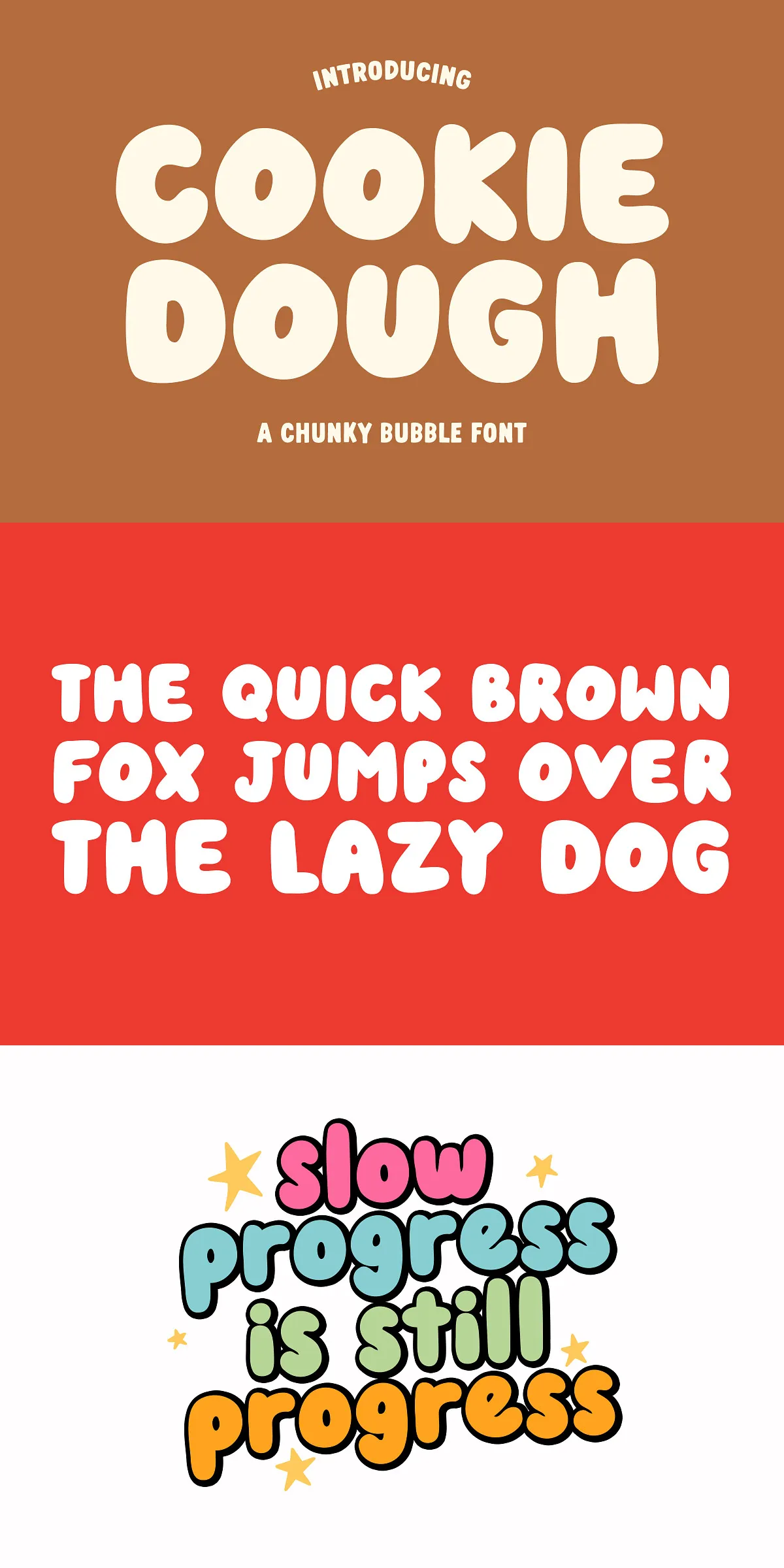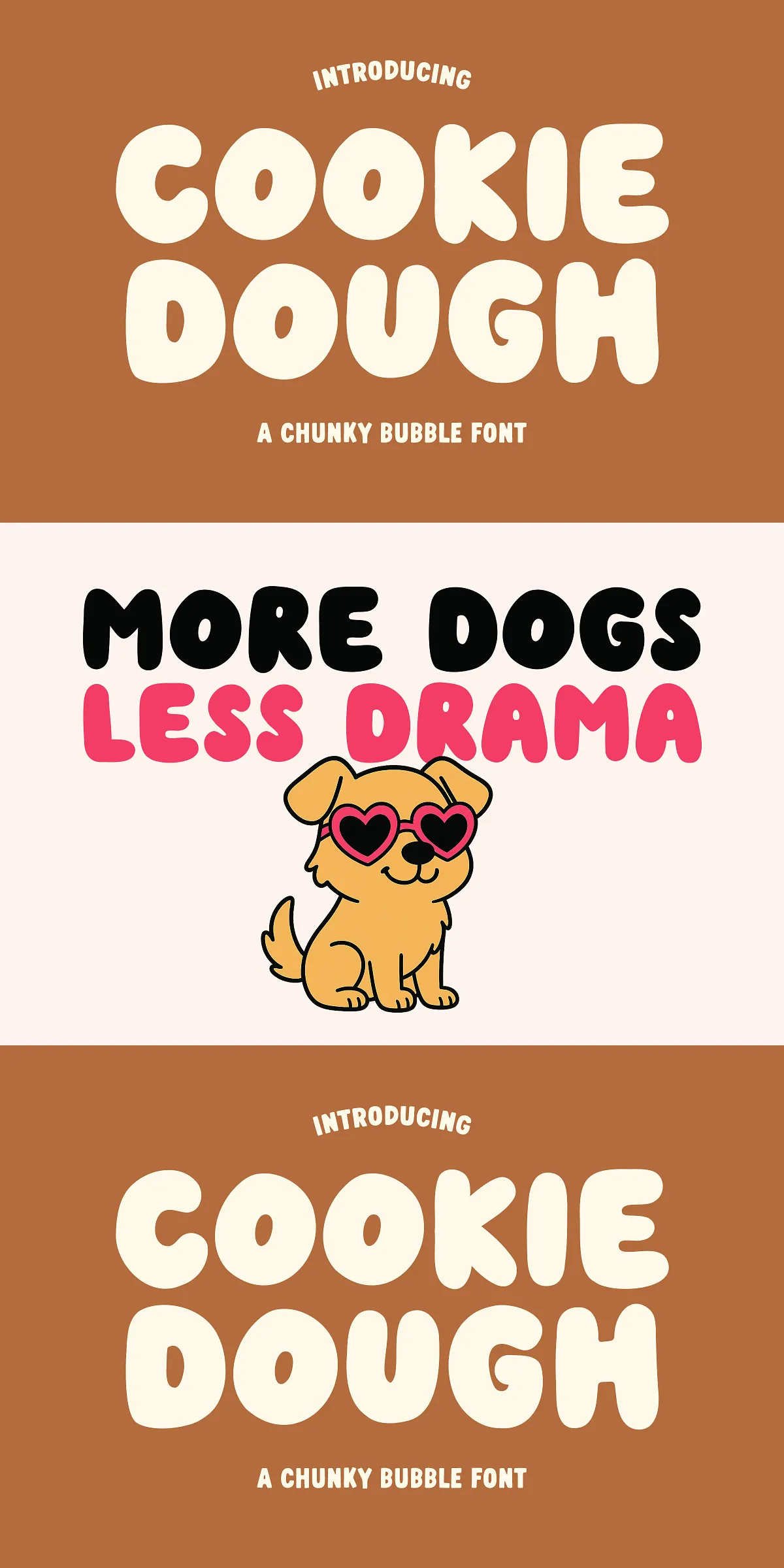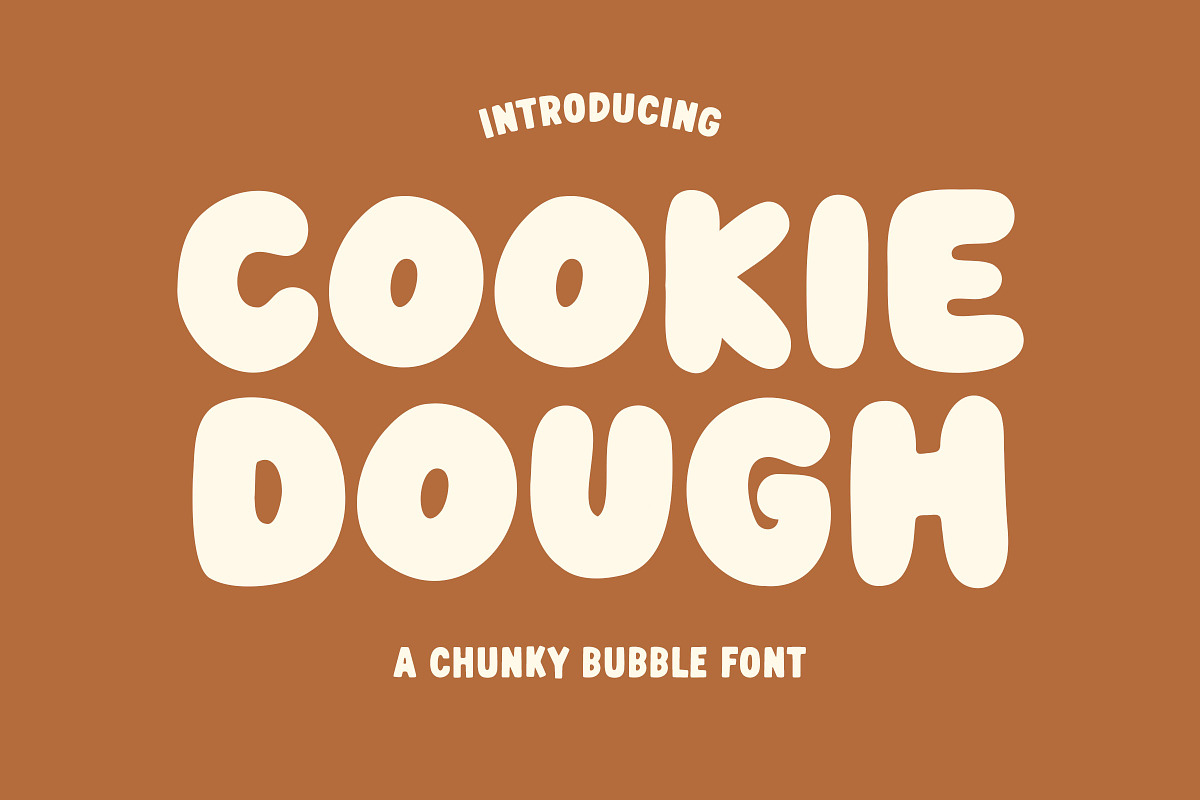

Cookie Dough brings a soft, friendly voice to every project. Built as a round bubble display font, it injects charm and warmth into merchandise, stationery, and digital graphics. Designers reach for Cookie Dough when they want immediate approachability: it reads as fun, tactile, and energetic without sacrificing clarity. Use it large for headlines, apply it on product prints, or pair it with a neutral body face to maintain balance across layouts. This description explains the font’s strengths, practical uses, file formats, and workflow tips to get you started quickly and confidently.
Why Cookie Dough Works For Playful And Quirky Projects
Cookie Dough’s rounded forms and consistent stroke weight create a friendly, approachable tone. The font emphasizes legibility at display sizes while preserving a handcrafted feel that suits casual branding and personal goods. It performs especially well on surfaces where texture and personality matter—T-shirts, phone cases, greeting cards, stickers, and mugs all benefit from its bubbly presence. The typeface actively draws the viewer’s eye, making it ideal for headlines, callouts, and logo treatments that must communicate cheerfulness at a glance.
Core Visual Characteristics That Define Cookie Dough
- Round, ballooned terminals and soft counters for a cuddle-friendly look.
- Even stroke weight that maintains consistency across sizes and printing techniques.
- Generous letterspacing and open shapes to preserve legibility on small-format products.
- Playful proportions that work well in all-caps or mixed-case compositions.
Common Applications And Real-World Usage Recommendations
Designers use Cookie Dough across a broad set of projects where a warm, playful voice helps sell the message. Print-ready applications include T-shirt graphics, enamel pins, packaging accents, greeting cards, invitations, and product labels. In digital contexts, Cookie Dough excels in social media headers, app splash screens, promotional banners, and playful UI elements. Because the face reads well at headline sizes, it also supports poster designs and event signage that need to stand out from a distance.
Practical Tips For Using Cookie Dough Effectively
- Set Cookie Dough large for headline impact; its rounded shapes read best at display sizes.
- Combine with a neutral sans-serif body font to keep long copy readable while preserving personality.
- Use simple color palettes to let the typeform shine; high contrast ensures legibility on merchandise.
- Test print proofs for textured substrates to ensure outlines remain crisp when applied to fabric or ceramic.
Included Font Files And Web Formats For Easy Deployment
This package contains the core file types designers need to deploy Cookie Dough across platforms. You will receive the desktop-ready OTF file for high-quality printing and professional layout software, the widely compatible TTF file for general use, and web-friendly font formats so you can embed the typeface on websites and in web-based applications. These deliverables allow flexible licensing and rapid implementation across both print and digital workflows.
Delivery Contents And Technical Details You Should Know
- OTF version for professional desktop and print workflows (high-quality rendering, OpenType features).
- TTF version for broad compatibility across operating systems and casual usage.
- Web font formats (such as WOFF/WOFF2) for fast web delivery and reliable browser rendering.
- Basic glyph set optimized for English and common punctuation; review licensing notes for extended language support.